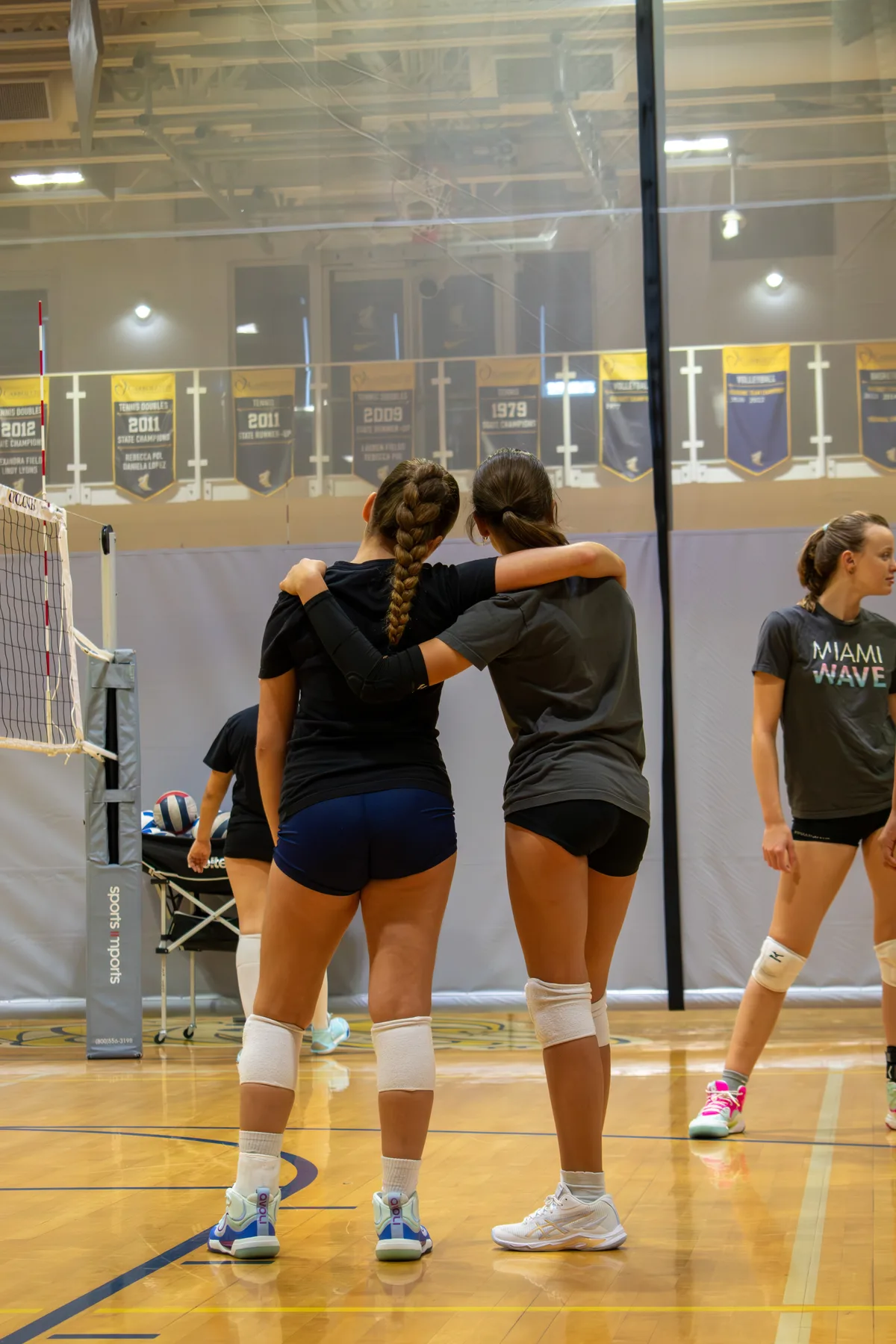
For some young athletes, the hardest part of a first volleyball session is not serving or passing. It is walking into a gym where everyone seems to know one another.
A quiet or hesitant player does not need to become outgoing overnight. The first goal is simply to feel safe enough to participate. Parents can help by making the new environment more predictable and giving the athlete a few small actions she can control.
Prepare one step before the gym
Explain what the first session may look like: arrival, warm-up, skill work, short games and a finish with the group. Avoid promising that everything will be easy. Instead, remind the player that beginners are expected to need instructions and make mistakes.
Choose one simple introduction the athlete can use: “Hi, I’m new. Where should I go?” Practicing that sentence once at home can make the first minute easier. Arriving a little early may also give the player time to find the court and meet the coach before the gym becomes busy.
Our first volleyball class checklist can help families organize the practical details.
Use small social goals
“Make friends today” is too large and vague. A better first-practice goal might be:
- learn one teammate’s name;
- stand next to someone during instructions;
- call “mine” once during a drill;
- give one teammate a high five;
- ask the coach one question.
Volleyball naturally creates repeated opportunities to connect. USA Volleyball describes the sport as a team activity in which players come together and encourage one another after each point. A hesitant athlete can join that rhythm one small action at a time.
Give the coach useful context
Before the first session, a parent can briefly tell the coach that the athlete is new and may need a clear first task. Keep the message practical rather than defining the child as “the shy one.” The coach can then help with placement, a partner or a simple instruction without putting unnecessary attention on the player.
Parents should also follow the program’s rules about where to wait and when to communicate with coaches. The athlete needs room to form her own connection with the group.
Choose an appropriate starting environment
The program should match the player’s grade and experience. Miami Wave describes Little Volley as a low-stress introduction for children in kindergarten through fifth grade. For older beginners and players with limited experience, Wave Training provides noncompetitive instruction focused on fundamentals and confidence.
After practice, ask one low-pressure question: “What felt more comfortable by the end?” Avoid measuring the day by how many people the athlete spoke to or how many balls she played correctly. The after-practice conversation guide offers more questions that keep the focus on learning.
Confidence usually grows through repeated, manageable experiences. Help the athlete take one step into the group, recognize that step and return for the next practice. Families can contact Miami Wave to confirm the best current program and location.