
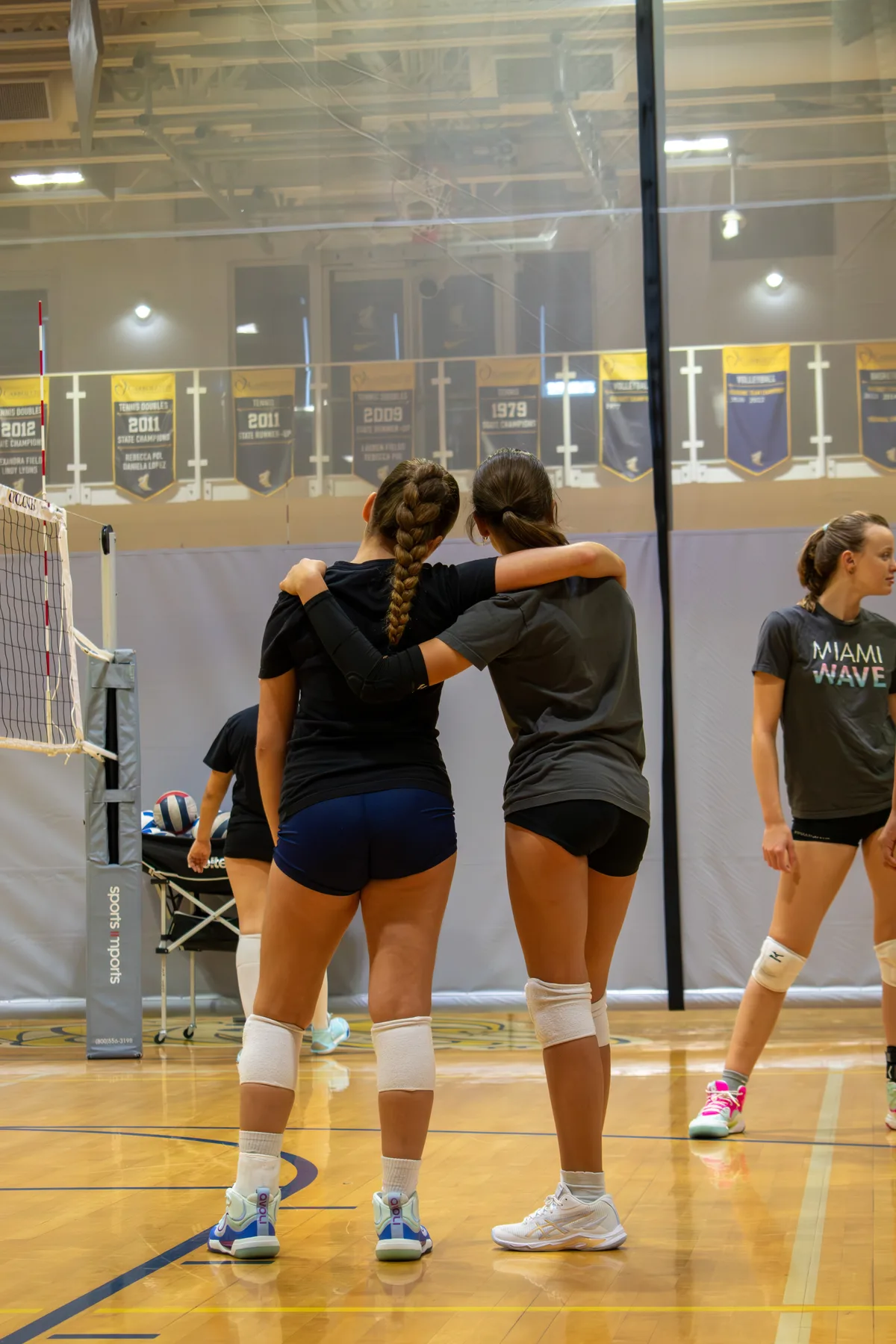
What do you say when your child walks out of volleyball practice? Some players want to describe every rally. Others are quiet, tired or frustrated by a skill they are learning. For Miami families fitting volleyball around school and the trip home, a short conversation can help a player feel heard.
You do not need a technical breakdown. Start with the experience, listen to the answer and let your child help decide what comes next.
Leave room for the player to talk
Give your child a chance to settle in before asking about practice. Offer a simple invitation to talk, and accept that the conversation may happen later. If they begin sharing, let them finish before adding your interpretation.
USA Volleyball’s parent guidance encourages attentive listening and asking about athletes’ experiences. A practical way to apply that advice is to begin with curiosity. What felt enjoyable? What was new? You may learn that making a friend mattered more to your child that day than landing a serve.
Choose one useful question
A long list of questions can feel like another assignment. Pick one that fits the moment:
- What was something you enjoyed today?
- Which part of practice felt challenging?
- Did a teammate help you with anything?
- What would you like to try again next time?
These are suggested conversation starters. They are not a club requirement or a test of whether practice went well.
If your child mentions an error, ask what they noticed or what the coach asked them to try. You can listen without supplying a different technical instruction. Save coaching questions for an appropriate conversation with the coach.
Recognize a specific effort
Encouragement is more useful when it connects to something concrete: staying involved in a drill, trying the coach’s cue again or supporting a teammate. If you watched practice, describe an effort you actually saw. If you did not, ask your child to identify one.
USA Volleyball’s discussion of the coach-parent relationship emphasizes learning, effort and enjoyment alongside competitive goals. That gives families useful things to notice during a session, even when a skill remains inconsistent.
Avoid assigning a lesson to every mistake. A player can acknowledge a difficult moment and still enjoy being part of the group.
Let the next step stay small
If your child wants to make a plan, help them choose one manageable goal. It might be calling for a ball, remembering a coaching cue or asking for clarification during the next session. Let the player suggest the goal, and leave technical priorities with the coach.
Match the conversation to your child’s stage. Miami Wave’s Little Volley program introduces grades K–5 to volleyball in a playful setting. Wave Training provides noncompetitive instruction for girls in grades 6–10 who are beginners or have limited experience. Ask about enjoyment and learning before making assumptions about moving to a different pathway.
For first-session preparation, read the Miami Wave parent checklist. If you have a program question, contact the club with your player’s grade, experience and preferred Miami area.
A useful conversation can be brief. Listen, recognize a real effort and leave space for your child to return to the court with a goal they understand.