Starting volleyball in middle school can feel like joining a conversation that has already begun. Other players may know the court lines or use words such as “setter” and “rotation,” while a beginner is still learning where to stand. That is normal. The best first step is not memorizing the whole game—it is choosing a setting where beginners are expected and fundamentals are taught clearly.
Choose the right starting lane
Before registering, look at three things: grade range, experience level and weekly commitment. Miami Wave describes Wave Training as noncompetitive instruction for beginners and players with limited experience, with two sessions each week. Because location availability and grade ranges can change, use the current program page and confirm the best location before enrolling.
A competitive team and a beginner training program solve different needs. A new player who needs repetitions, vocabulary and confidence may benefit from instruction before adding tournament expectations. Starting in the appropriate lane is not falling behind; it gives the athlete room to learn.
Focus on four useful skills
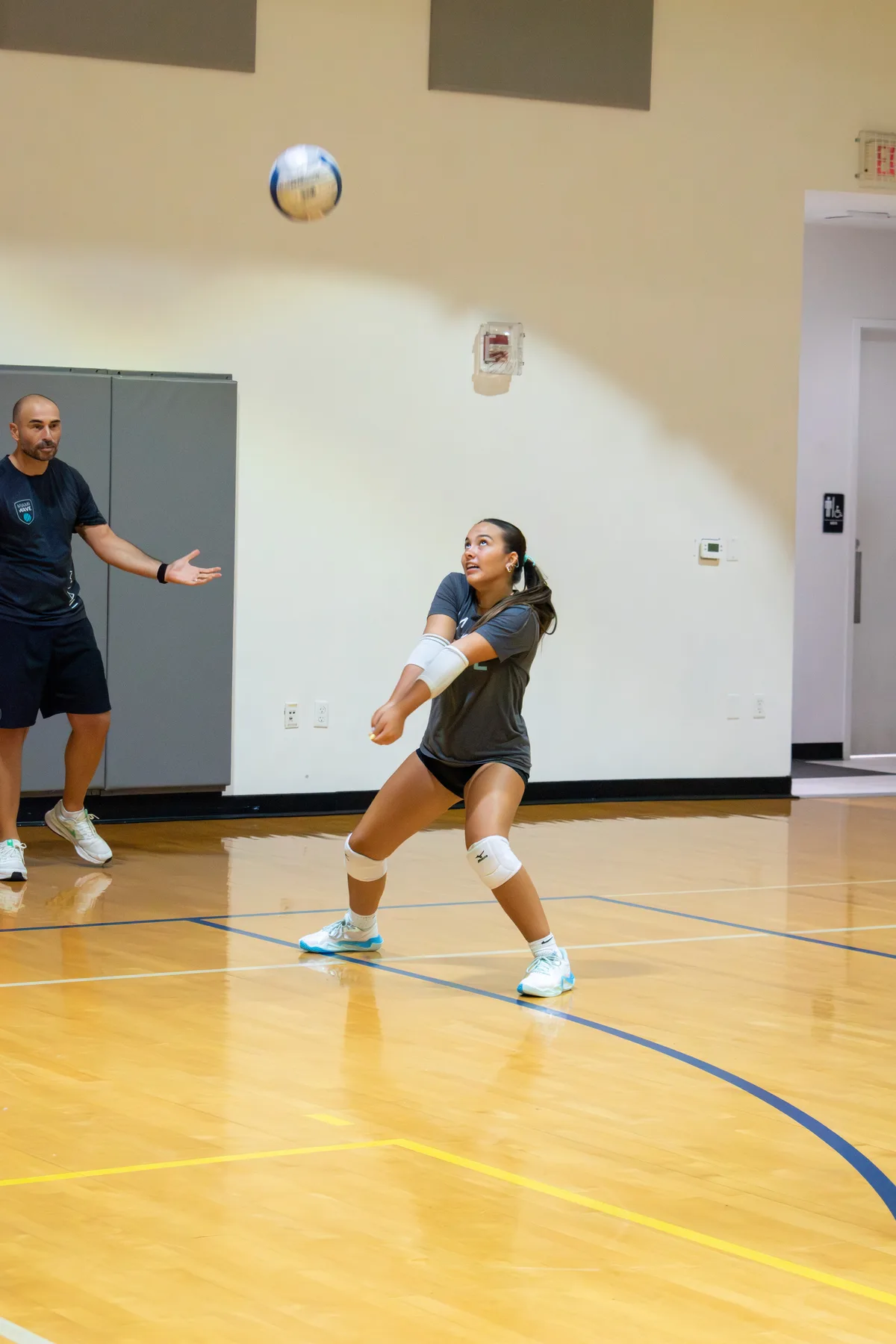
USA Volleyball’s beginner materials organize the game around core skills including serving, forearm passing, overhead passing or setting, and attacking. A middle-school beginner does not need to master all four at once. For the first few weeks, aim for one simple improvement at a time:
- Move into a balanced ready position before the ball arrives.
- Send a controlled ball toward a teammate or target.
- Learn the names of the court areas and basic roles.
- Call the ball clearly and recover for the next contact.
These small actions make practice easier to follow. They also give a player something concrete to notice, even on a day when the ball does not cooperate.
Make the first month manageable
Arrive with enough time to change shoes, fill a water bottle and find the correct court without rushing. At the first session, the athlete can tell the coach, “I’m new to volleyball. What should I focus on today?” That short question gives the coach useful context without asking the player to explain everything.
After practice, choose one observation rather than reviewing every mistake. Ask what felt clearer than it did at the start, or which skill the player wants to try again. Our first-class checklist can help with preparation, and the after-practice conversation guide offers low-pressure questions for the ride home.
Notice progress beyond points
Early progress may look like calling “mine,” getting to a target sooner, understanding a drill after one explanation or encouraging a teammate after an error. Consistent attendance and comfort in the gym matter before statistics do.
For Miami families looking for a structured beginner option, review the current Wave Training details and contact Miami Wave to confirm the location, grade fit and schedule. The goal of the first month is simple: help the player understand the environment, build a foundation and want to return.