Improvement feels easier when a player walks into the gym with one clear purpose. “Get better at volleyball” is too broad for a single practice. A smaller goal gives the athlete something specific to notice, repeat and review before leaving the court.
USA Volleyball recommends process goals: actions the athlete can control, rather than outcomes such as winning, starting or playing perfectly. That idea works especially well for beginners, but it also helps experienced players stay focused during a busy team practice.
Start with the coach’s current emphasis
A personal practice goal should support the lesson or team objective, not compete with it. Listen to the coach’s instructions, then choose one part that needs attention. If the practice focuses on serve receive, this is probably not the day to make attacking power the main goal.
Miami Wave’s Wave Training program develops passing, setting, serving, hitting and game understanding for beginners and players with limited experience. Competitive athletes can use the same goal-setting method within their team’s practice plan. Families comparing those paths can review our training versus club team guide.
Turn a big wish into one visible action
“Pass better” is difficult to measure during practice. A useful goal describes an action the player can recognize. For example:
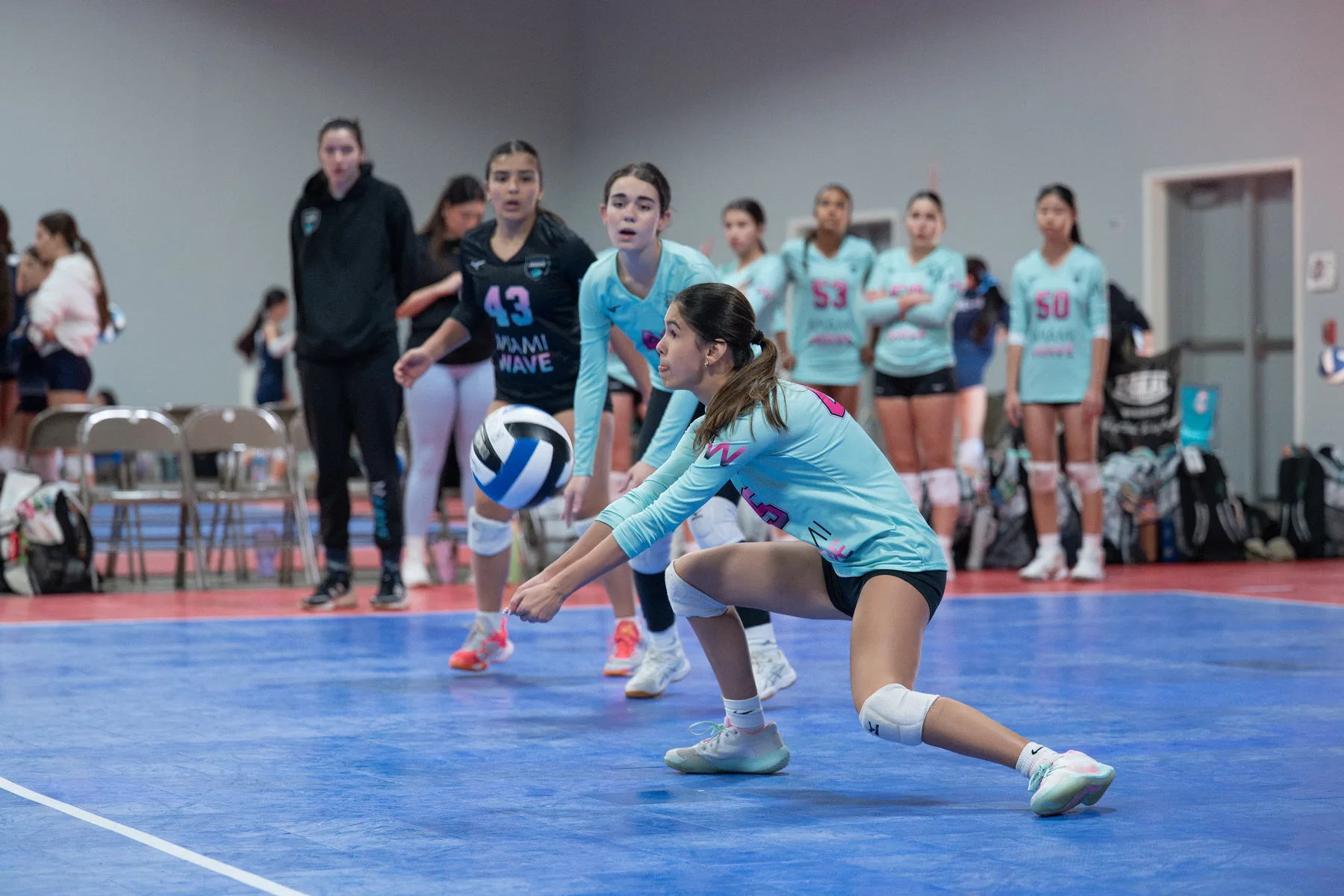
- Passing: get into a ready position before the serve crosses the net.
- Serving: use the same pre-serve routine every time.
- Setting: move the feet to the ball before contacting it.
- Attacking: complete the approach and land under control.
- Communication: call for the ball early and clearly.
The goal should be challenging but realistic for that session. It also needs to match the technique the coach is teaching. Players should avoid adding a new cue from a video or friend when it conflicts with the coach’s instruction.
Use a simple three-question review
At the end of practice, take one minute to answer:
1. What was my goal? 2. When did I do it well? 3. What will I repeat or adjust next time?
Keep the answer short. One sentence in a phone note or notebook is enough. USA Volleyball’s goal-setting guidance also recommends reflecting on progress and adjusting goals as circumstances change. The purpose is not to grade every contact; it is to notice patterns and build the next useful step.
Parents can help without turning the car ride home into an evaluation. Ask the player what goal she chose and what she learned, then listen. Our after-practice conversation guide offers a simple approach.
Bring the goal to the next practice
Before the next session, read the previous note and decide whether to repeat the same goal or choose a new one. Some skills need several practices before the action becomes more consistent. Repeating a process goal is not a failure; it is how a useful habit develops.
Players looking for the right Miami Wave pathway can compare current programs. Wherever you train, arrive with one goal that fits the day’s coaching, focus on the action you control and leave with one clear lesson for the next practice.